
Cataract Surgery
Clearer Vision, Brighter Days
EyeHealth Northwest specializes in providing cataract surgery to the Portland community and surrounding areas. We invest in the most state-of-the-art, safe and advanced technology, unsurpassed patient care, and outstanding results.

procedures each year
If you have been diagnosed with cataracts, it is important that you select an experienced surgeon with a reputation for excellence like the professional ophthalmologists at EyeHealth Northwest. Together, our surgeons perform more than 12,000 procedures each year. Our affiliations with all the major area hospitals have earned us a reputation as quality, caring surgeons, which explains why so many nurses refer their friends and family to our offices and see us as patients themselves.
Understanding Cataracts
What Is a Cataract?
A cataract is a clouding of the eye’s normally clear lens. It is not a film over the outside of the eye, as many people think. The lens is located inside the eye, behind the iris (the colored part of the eye), and helps to focus light rays for clear vision. With age, and sometimes as a side effect of medications, the lens becomes clouded. This clouding of the lens results in blurred vision.
Cataracts usually develop slowly, so changes can be easy to dismiss at first. If everyday tasks have started to feel harder, the symptoms below may sound familiar.
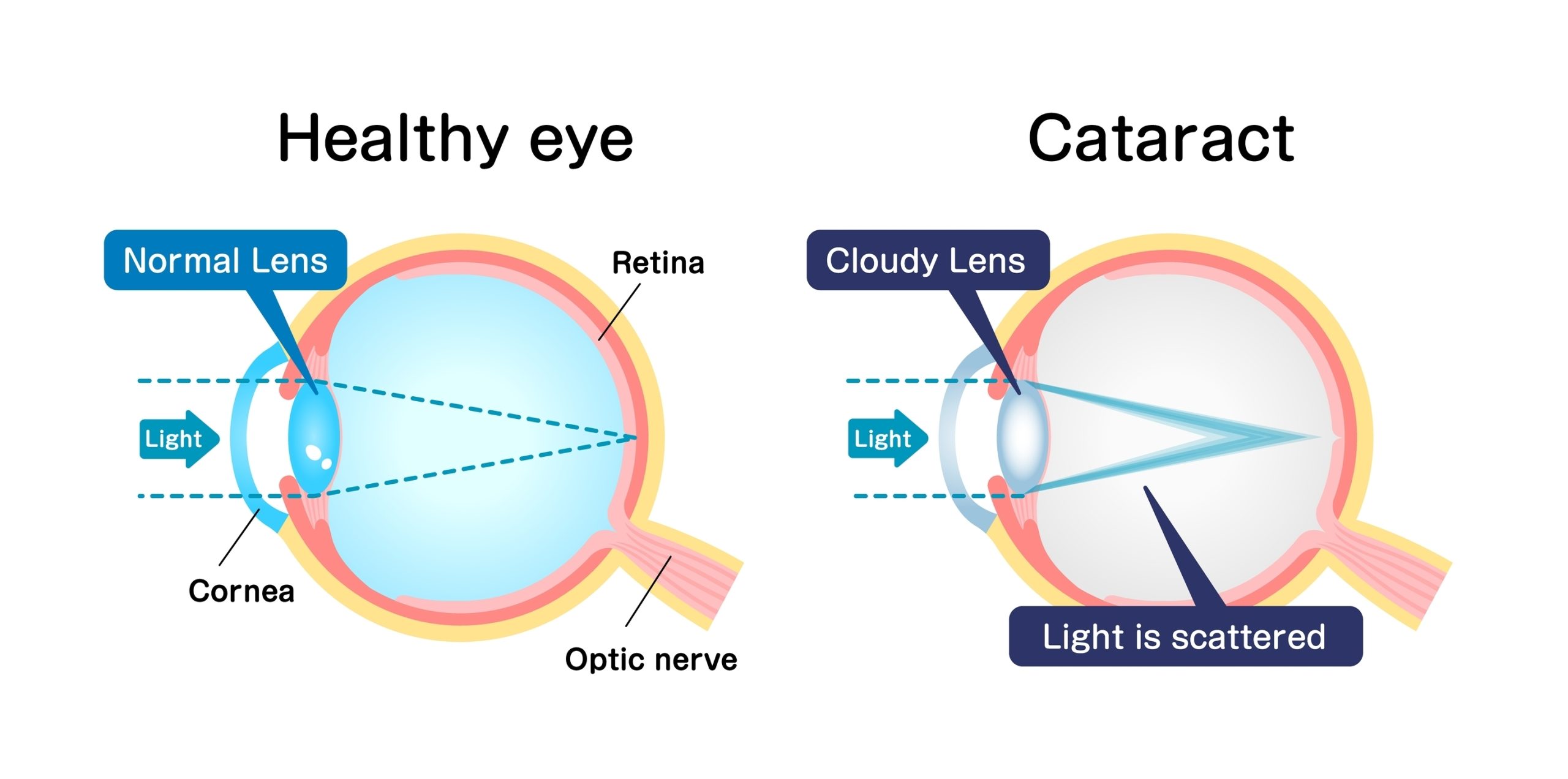
Do You Think You Might Have a Cataract?
While cataracts often affect both eyes, sometimes only one eye is affected. It is common for one cataract to be more cloudy, resulting in poorer vision in one eye compared to the other. Most often, cataracts occur as a natural consequence of aging. Lens clouding forms to a greater or lesser degree in everyone with age. A family history increases the risk of cataracts. Cataracts are also caused by:
- Some medical problems, like diabetes
- Previous eye injuries or surgery
- Congenital defect
- Medications, such as cortisone (prednisone)
- Lifetime ultraviolet light exposure (sunlight)
- Other eye diseases like iritis
A comprehensive eye examination by an eye care professional (ophthalmologist or optometrist) can detect the presence and extent of a cataract. There can also be reasons other than cataracts for worsened vision, including diseases of the cornea, retina or optic nerve. If another disease is present with a cataract, perfect vision may not be restored after cataract surgery.
Not sure whether your symptoms point to a cataract? You don’t need to have the answer before you call. Our team will examine your eyes, explain what we find, and help you decide on the right next step.
Common Cataract Symptoms
- Painless loss of visual clarity
- Changes in eyeglass prescription needs
- Glare and light sensitivity
- Reduced nighttime vision
- A need for brighter light to read
- Loss of color vision
- Difficulty driving and seeing at night
- Blurry or cloudy vision
- Appearance of halos or glare
- Difficulty reading
What to Expect
Cataract Surgery Today
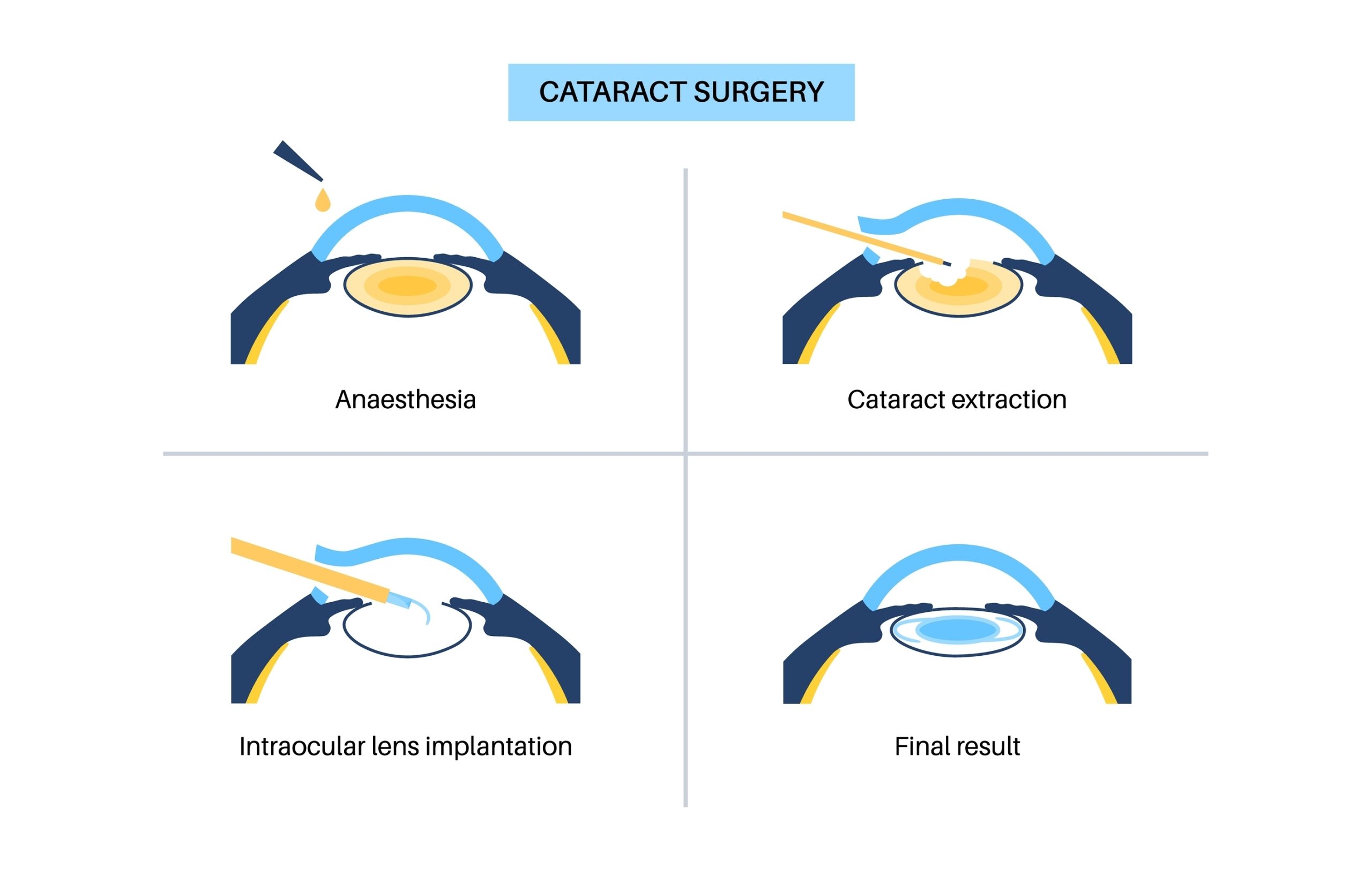
Cataract surgery involves removing the natural lens that has become clouded and replacing it with an artificial intraocular lens implant.
Cataract surgery has changed dramatically over the last 20 years. Many patients remember the days when the operation required a hospital stay of several days with the patient’s head in sandbags and weeks of recovery. Retinal detachment was a frequent complication and thick aphakic glasses were necessary for clear vision. Today’s cataract surgery is totally different. The operation is now done on an outpatient basis, usually only a two- to three-hour stay.
Here’s what your surgery day and recovery typically look like:
A quick, comfortable procedure
The actual surgery is 10 to 20 minutes in length and typically painless. A mild sedative takes care of any anxiety during the surgery.
A tiny incision
A very small incision is made through a bloodless area of the eye and the cataract is removed with ultrasound.
Your new lens
A foldable implant is rolled up like a carpet and inserted through the same small incision. It is fitted into the eye behind the pupil where the cataract was located before removal. Suturing is generally not necessary. The wound seals on its own and is quite secure.
Healing at home
A seal protects the eye the first day and then the patient wears a shield at night for a week. Regular activity is possible right away. Eyedrops are used on a tapering schedule for one month after surgery to reduce the risk of infection and help healing.
New glasses, if necessary, are prescribed two to three weeks after surgery. If the second eye has a cataract it can be done within three to four weeks. Whether or not glasses are needed depends on the implant lens chosen.
Complications are rare and the success rate is in excess of 95%. The cataract will not grow back after surgery. However, the membrane which supports the intraocular lens implant can become cloudy in some patients months or years later. If this occurs, simple laser treatment is all that is necessary to restore clear vision.
Your Lens, Your Vision
Advanced Cataract Surgery Options
One of the most exciting parts of cataract surgery is choosing how you want to see afterward.
Lens implants allow patients to see after cataract surgery without the thick glasses or contact lenses that were necessary in the past. These lens implants are called intraocular lenses, or IOLs. EyeHealth Northwest offers a wide range of IOL options such as Monofocal, Toric, Multifocal, Extended Depth of Focus, and the revolutionary Light Adjustable Lens.
Today lens implant technology allows for more choices in vision correction benefits and outcomes after cataract surgery.
1. Traditional Cataract Surgery
- Improve quality of vision with glasses
- Glasses required all of the time (if you have astigmatism)
2. Cataract Surgery with Astigmatism Correction
- Premium Toric Implant
- Improved distance vision without glasses
- Glasses required for near and intermediate vision
3. Cataract Surgery for Distance, Intermediate and Near Vision
- Premium Multifocal Implant or Extended Depth of Focus Implant
- Improved distance, intermediate and/or near vision without glasses
4. Cataract Surgery with Customized Vision
- Premium Light Adjustable Lens
- The only implant available allowing optimization AFTER lens implantation and healing
You don’t have to make this decision alone. During your consultation, your surgeon will talk through your lifestyle, your visual goals, and the health of your eyes to help you find the lens that fits you best.
Making Care Affordable
Cataract Surgery Financing
EyeHealth Northwest can help you manage the cost of surgery through our partnership with CareCredit. CareCredit offers interest-free financing payment plans up to 24 months, helping make cataract surgery more affordable. We don’t want finances to be an obstacle between you and vision freedom.

FAQ
Cataract Surgery FAQs
The following information is intended to supplement your medical visit with your ophthalmologist. It will help you understand cataracts, the risks of cataract surgery, and the types of replacement lens options. If you have additional questions after reading this, please be sure to ask your surgeon.

Getting Started
Ready to See More Clearly?
If cataracts are getting in the way of driving, reading, or the activities you love, it may be time to talk with a surgeon. Our team will walk you through every step, from your first exam to your final follow-up.
What Our Patients are Saying